
History
Starlight Biotech, LLC, was founded in October 2023 by Noreen Brenner, CEO and Chief Scientific Officer (CSO).
Our mission is to come up with scientific hypotheses that we validate using bioinformatics tools. Any needed lab work is outsourced to external labs. Our goal is to get patents, which we then license to pharmaceutical and biotech companies.
Our Team

Noreen Brenner, MA in molecular biology, PSM in bioinformatics, CT (she/her)
Founder, CEO and Chief Scientific Officer (CSO)
Noreen Brenner has an MA in biology (with emphasis on molecular, cell and developmental biology) from Queens College, City University of New York. In addition, she earned a BS in biology (also focused on molecular, cell and developmental biology), also from the City University of New York (CUNY BA Program). She also has a Professional Science Master’s degree in bioinformatics from the University of Maine. What’s more, she nearly earned a PhD in neuroscience from CUNY Graduate Center (she completed 55 credits out of 60, passed the First Exam and her GPA was above 3.3).
Some personal tidbits: Ms. Brenner is a member of the high IQ society Mensa, and also qualified for the 99.9 percentile high IQ society, the International Society for Philosophical Enquiry (ISPE). Furthermore, she is bilingual in English and German, can speak French. and has certificates in Latin and Sanskrit.
Noreen’s Story – UMaine Online – University of Maine
Noreen Brenner – Graduate School of Biomedical Science and Engineering – University of Maine (umaine.edu)
Ms. Brenner is knowledgeable about many molecular biology techniques. In addition, she is proficient in the analysis of NGS data such as RNA-Seq data. She has extensive knowledge of SQL, Perl, R & Python, crucial database management or programming languages.
She also knows how to perform epistasis analyses to find out which of two interacting proteins is downstream. Furthermore, she can perform genome wide association studies, quantitative trait loci analysis, biostatistical analyses and enrichment analyses (where you take a list of differentially expressed genes and find out which biological processes are represented in a statistically significant fashion). She is highly proficient in the use of a plethora of online bioinformatics tools.
Noreen Brenner has worked on about a dozen research projects in the course of her studies, including projects about stem cells behind the eye of zebrafish, peripheral nerve regeneration, comparing the olfactory receptor genes of various species to look for Darwinian selection, a project about the role of amyloid precursor protein in Alzheimer’s disease (AD), the role of HADH2 in AD, the role of Wnt in AD, systems biology and molecular modeling.
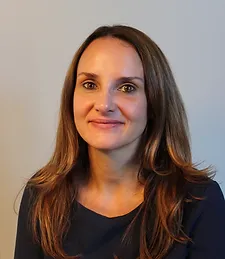
Professor Sandra Rieger, PhD in developmental genetics (she/her)
Scientific Advisor
Professor Rieger is an internationally recognized scientist who has been working on sensory neuropathy for several years. She is a member of the Toxic Neuropathy Consortium as part of the Peripheral Nerve Society, which brings internationally recognized leaders in the Neuropathy field together to develop therapies for this understudied condition.
Dr. Rieger is an associate professor at the University of Miami and has been awarded funding for her research on peripheral neuropathy from the National Institutes of Health.
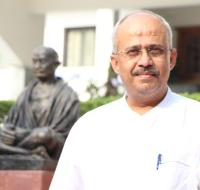
Professor Sanjay Harke, PhD in biochemistry (he/him)
Consultant / Scientific advisor
Director of Mahatma Gandhi Mission’s Institute of Biosciences and Technology, Aurangabad, India
From 2004 to 2007 Professor Harke was the head of the Department of Bioinformatics and Biotechnology, Dr. G. Y. Pathrikar College of Computer Science and Information Technology, Mahatma Gandhi Mission
He earned a PhD in Biochemistry from Dr. Babasaheb Ambedkar Marathwada University, Aurangabad, India in 2010, an M.B.A (Management of Information Systems) from Maharishi Institute of Management , Hyderabad, India in 1998 (Iowa University, USA), a post graduate diploma in Computer Applications from MICROSIS, Hyderabad, an M. Sc. in Agriculture (Entomology) from Marathwada Agriculture University, Parbhani, Maharashtra and a B.Sc. in Agriculture from Marathwada Agriculture University Parbhani, Maharashtra, India.
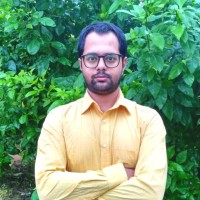
Santanu Banerjee, BS in engineering, master’s in engineering in progress at an IIT (he/him)
Consultant / Machine Learning and AI advisor
Santanu Banerjee has a bachelor’s degree in electrical engineering from National Power Training Institute, Durgapur, India, and is working towards his master’s degree in industrial and systems engineering from the Indian Institute of Technology (IIT) Kharagpur, India (he is a senior research fellow at IIT Kharagpur). His skills include machine learning, artificial intelligence, python programming, mathematical modeling, optimization, operations research, quantum computation, computational biology and bioinformatics. Furthermore, he is passionate about extending the human lifespan, and founded a society that supports this goal, The International Society for Enforcing Universal Permanence.
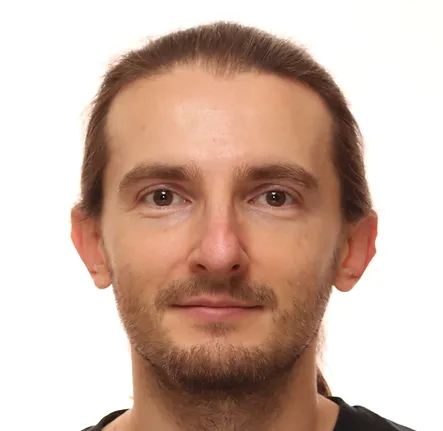
Mihai Todor
Master of Science in Automation and Applied Informatics, University Politehnica of Bucharest, Romania
Computer science consultant.
Mihai is a seasoned software engineer and tech lead focused on cloud computing, scalability and data streaming. He is currently working as a freelancer at Independent Data Lab (https://independentdatalab.com) and has extensive experience in designing and building distributed microservice-based systems, leveraging Kubernetes and various public cloud managed services to develop robust and scalable solutions. He is also an open source contributor for https://www.benthos.dev, a popular Golang data streaming processor. He graduated with an M.Sc. from University Politehnica of Bucharest, Romania in Automation and Applied Informatics in 2009 and started his software engineering career in 2007. In the future, he is planning to pursue a PhD in Computational Biology focused on immunotherapy for cancer and would like to study genome engineering, epigenetic clocks and the underlying mechanisms of biological ageing.

Smruti Panda, master’s in bioinformatics, bachelor’s in biotechnology, working towards a PhD in Computational Biology
Bioinformatics Consultant
Ms. Panda has a Master of Technology degree with specialization in bioinformatics from the International Institute of Information Technology, Hyderabad, India. She also has a Bachelor of Technology in Biotechnology with honors from IMS Engineering College, Ghaziabad, India.
Ms. Panda is proficient in analyzing NGS-data, such as DNA-seq, shotgun sequencing data, RNA-seq, metagenomics, bisulphite, ATAC-seq and pharmacogenomics data. She has 6 years of experience in the field of bioinformatics. Her expertise includes in-depth knowledge of programming languages such as R and python as well as bash and shell scripting. She has worked with various bioinformatics databases such as TCGA, COSMIC, FDA and many more. She has been working in the drug repurposing field, which plays a very crucial role in the pharmaceutical industry nowadays and knows machine learning, cancer genomics, systems biology and biostatistics. She performed statistical analyses while working on her bachelor’s and master’s theses. Ms. Panda is experienced in primer designing, gene panel designing, copy number variation analysis and tumor prediction analysis.
She has one publication, “Statistical Studies of Different Cancer-Causing Protein Sequences”. Ms. Panda is experienced in the creation of mathematical models using AUGUSTUS. In addition, she has worked with Github repositories and docker container.
Bioinformatics Skills
DNA-seq analysis
Shotgun sequencing data analysis
RNA-seq analysis
Metagenomics data analysis
Bisulphite data analysis
ATAC-seq data analysis
Pharmacogenomic data analysis
Machine learning
Cancer genomics
Systems biology
Biostatistics
Primer designing
Gene panel designing
Copy number variation analysis
Tumor prediction analysis.
Programming language R
Programming language python
Bash scripting
Shell scripting

Lohith DeSilva, BS
Consultant / Scientific and Patent Advisor
Lohith DeSilva has a Bachelor of Science in biology with emphasis on cell and molecular biology as well as some graduate coursework in this area. He has also completed significant coursework in mechanical engineering. He is highly innovative and analytical with a penchant for solving problems. His role at Starlight Biotech is to advise about biological topics and also advise about the process of patenting. He is currently working on obtaining patents on mechanical systems he has designed.

Prekshi Garg, PhD in biotechnology, Amity University, Lucknow, India
Bioinformatics, microbiome data analysis, computational drug discovery and biotech consultant
Prekshi Garg completed her PhD in biotechnology at Amity University, Lucknow, India. Her dissertation focused on transcriptome and exome data analysis in patients with intellectual disabilities. Ms. Garg was awarded the ‘International Best Researcher Award’ from the International Society for Scientific Network (ISSN) for her groundbreaking work on miRNAs associated with intellectual disabilities.
Ms. Garg has a passion for research. Her expertise spans various domains of in silico research, including next-generation sequencing (NGS) analysis, microbiome data analysis, computational drug discovery, systems biology, genomics and proteomics. Her knowledge of these fields is evident in several research papers published in journals of high repute.
Even though she is at an early stage in her career, Prekshi has already co-authored an academic book, co-edited an international book, and served as a student coordinator for a special issue of Frontiers of Genetics. She also has been granted a copyright.
Furthermore, she has won prestigious awards, including the ‘Lalita and Ravindra Nath Travel Fellowship’ from the Indian Academy of Neurosciences in 2023, and the ‘Young Achiever’s Award 2024’, granted by the Help U Education and Charity Trust. Her multifaceted skills and knowledge make her an expert bioinformatician, poised for continued success and impact in her field.

Arafat Rahman, PhD in Genetics, Genomics and Bioinformatics from the University of California at Riverside
Bioinformatics, computational biology and microbiome consultant
Dr. Arafat Rahman is a Postdoctoral Researcher at the Weisberg Lab, Department of Botany and Plant Pathology, Oregon State University. He has extensive experience spanning microbial genomics, host-microbe interactions, and science outreach.
He earned his Ph.D. in Genetics, Genomics, and Bioinformatics from the University of California, Riverside, where he explored how competitive dynamics among rhizobia shape symbiotic fitness landscapes. His doctoral research led to publications in Current Biology, mBio, and other journals, laying the foundation for his continued exploration of microbial evolution.
His postdoctoral research at Oregon State University focuses on the genomic epidemiology and evolution of Agrobacterium vitis, a major grapevine pathogen. His contributions to the field include the development of bioinformatics pipelines such as Beav for bacterial genome annotation, as well as visualization and utility tools like PySyntenyViz, TangleR, and Bioinfutils.
He completed his M.S. and B.S. in Microbiology at the University of Dhaka, Bangladesh. During this time, he worked on diverse topics such as virus genotyping, silkworm infection models, and the molecular evolution of antimicrobial peptides.
Beyond the bench, he has served in various teaching roles, including as a lecturer at Noakhali Science and Technology University and as a teaching assistant for multiple undergraduate courses at UC Riverside. He has also mentored undergraduate and graduate students in both laboratory and computational settings, with a focus on hands-on training in genomics and bioinformatics.
He is an editor of Biggan Blog, a leading Bengali-language science communication platform, and the author of several popular science books in Bengali covering topics such as genetics, the brain, and life sciences. He actively participates in science outreach activities, including STEM camps, public lectures, and genomics workshops.
 Starlight Biotech